
As the sun started to rise, we began our preparation to move to the next anchorage, heading south towards Alder’s Cay. I was a bit worried that with all the moving around we did the previous night, our anchor chain would be wrapped around rocks all over the bottom, making it a chore to pick up. Luckily, the stars aligned and we were able to get the chain up smoothly.
Everything was going well until we were just about to weigh the anchor off the bottom. All of a sudden, the current pushed us sideways, causing the anchor chain to skip off the roller. I tried to keep the boat as steady as possible while Pamela worked to get the chain back on. After a few tries, we decided to switch spots; Pamela moved to the helm and I took over anchor duty. Thankfully, Pamela held the boat steady enough that I could drop the anchor back onto the bottom and pull the chain back onto the roller. It’s not something I recommend doing, but I was thankful it worked and we were able to pull the anchor up the rest of the way.
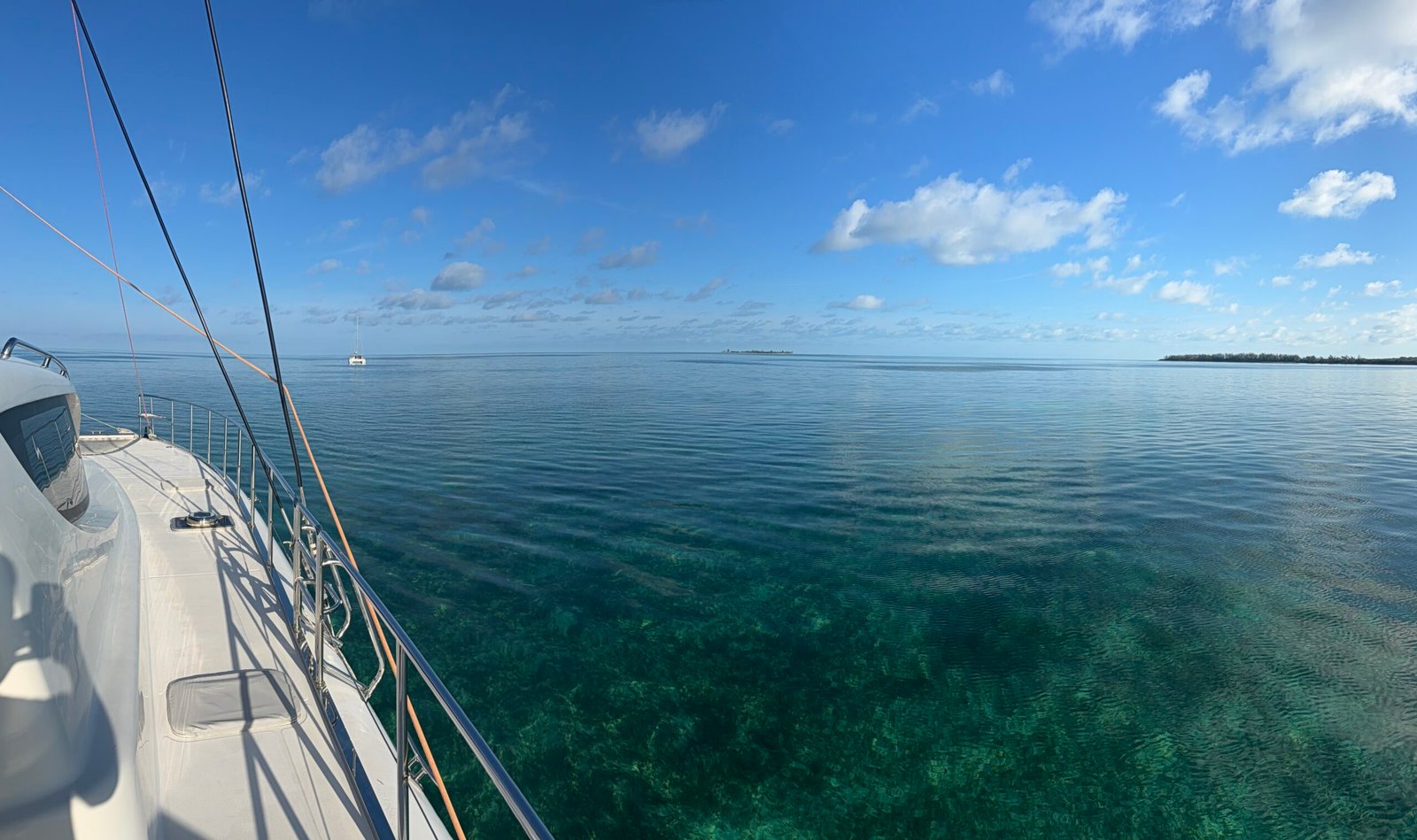
It was only a couple of hours south before we were pulling into the cut at Alder’s Cay. The waves were a bit rough as we dropped the hook, but the wind was predicted to change directions. When it did a few hours later, the waves smoothed out and we were thankful to be in our new spot.
At about 2:30 AM, I woke up to the sounds of crashing thunder. Pamela was already up because the kids were awake and afraid of the loud storm. At about 3:00 AM, there was a crazy bright flash of light followed by a tremendous clap of thunder, and then our boat was plunged into darkness. All of our digital light switches began flashing blue in eerie, sporadic patterns. I was thankful that we were all together because it allowed for a quick check to make sure everyone was alright. Once I knew we were all well, the next order of business was to ensure we were not taking on water. After a quick check of the bilge, I could finally breathe a sigh of relief.
The next thing I did was jump some fuses around to get our anchor light working again. It is funny looking back on this now—being so concerned about our anchor light when no one in their right mind would be out moving their boat in the dark during the middle of a massive thunderstorm—but that is what I did. Then, it was time to try to get some rest, as I knew we had a big day ahead of us.
We stayed at Alder’s Cay the following day and night, assessing what was working and what wasn’t. Unfortunately, nearly all of our Garmin navigation electronics were fried. Two of my bigger concerns were our autopilot and our AIS (which reports our location to other vessels so we can be seen, and allows us to see them). After testing and troubleshooting, we confirmed we had no working autopilot. We were also not seeing other vessels on AIS, though we were still broadcasting our signal, which would at least help other vessels know of our presence.
The next day, we headed down to Chub Cay. It was a four-hour hand-steering adventure through large waves. It was difficult to keep the boat on course as every wave pushed our bow this way and our stern that way, but we made it down.
After calling the marina to get fuel, we slowly headed in. Our digital switching computer (the C-Zone) was totally out, so we had no way of viewing how much fuel we currently had on board. God blessed us with an easy docking, providing a slight breeze that pushed us right toward the dock. There was already a monohull at the station getting fuel, so we had to pass her to dock. Thankfully, as we passed, the gentle breeze nudged us right up onto the pilings. Since we had no fuel gauges, I had to listen closely to the vents to determine when the tanks were full. I wasn’t too worried, as we only needed the two tanks to be a quarter full—about 25 gallons each—to make it back to Florida. I was pretty sure we got them close to full, and we also filled an additional 20-gallon jerry can with diesel just in case.
After fueling up, we left the dock and headed out to anchor. It turned out to be a very calm day and night. We stayed at Chub Cay for a couple of days, waiting for our weather window to open across the Gulf Stream.
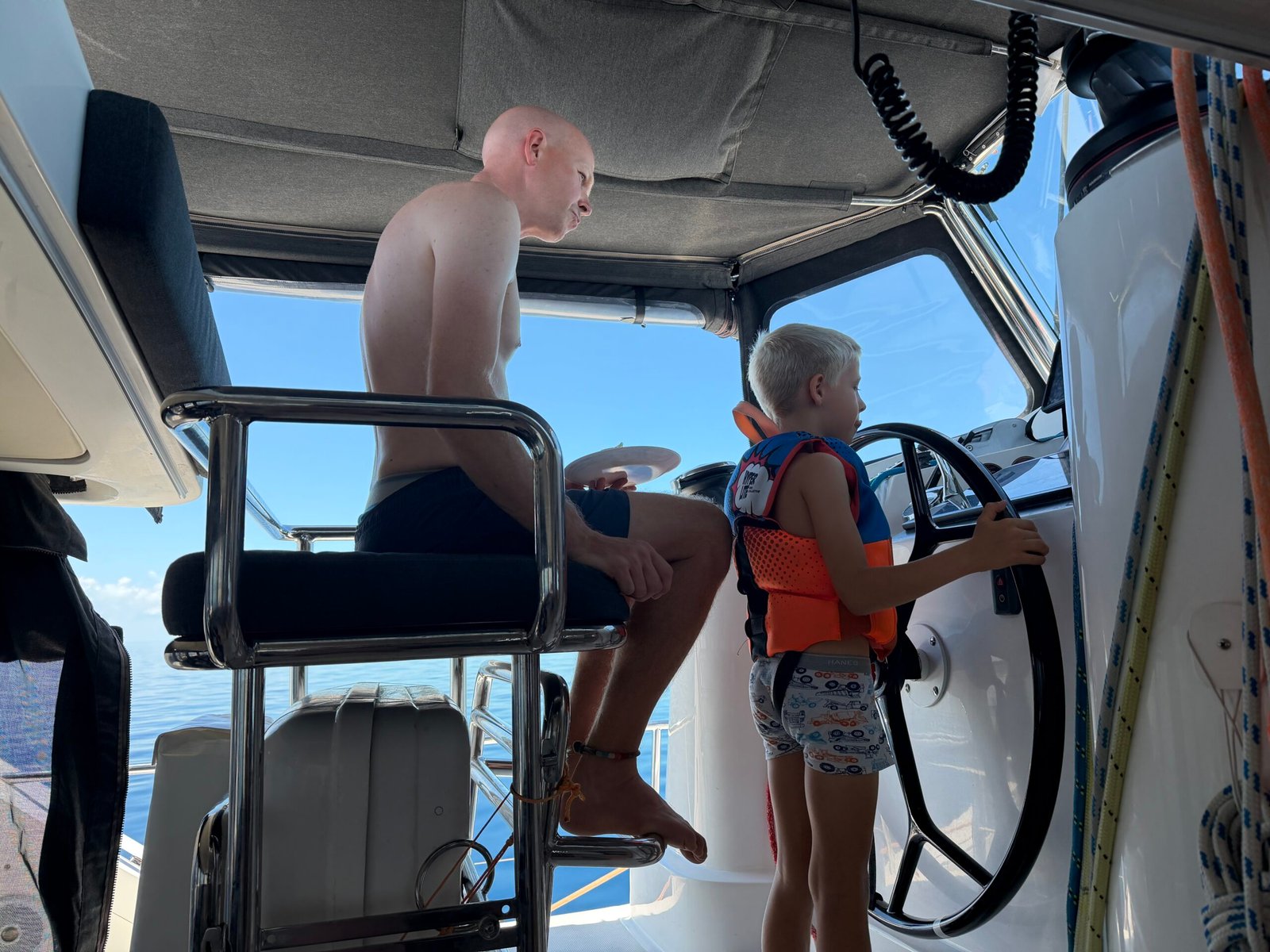
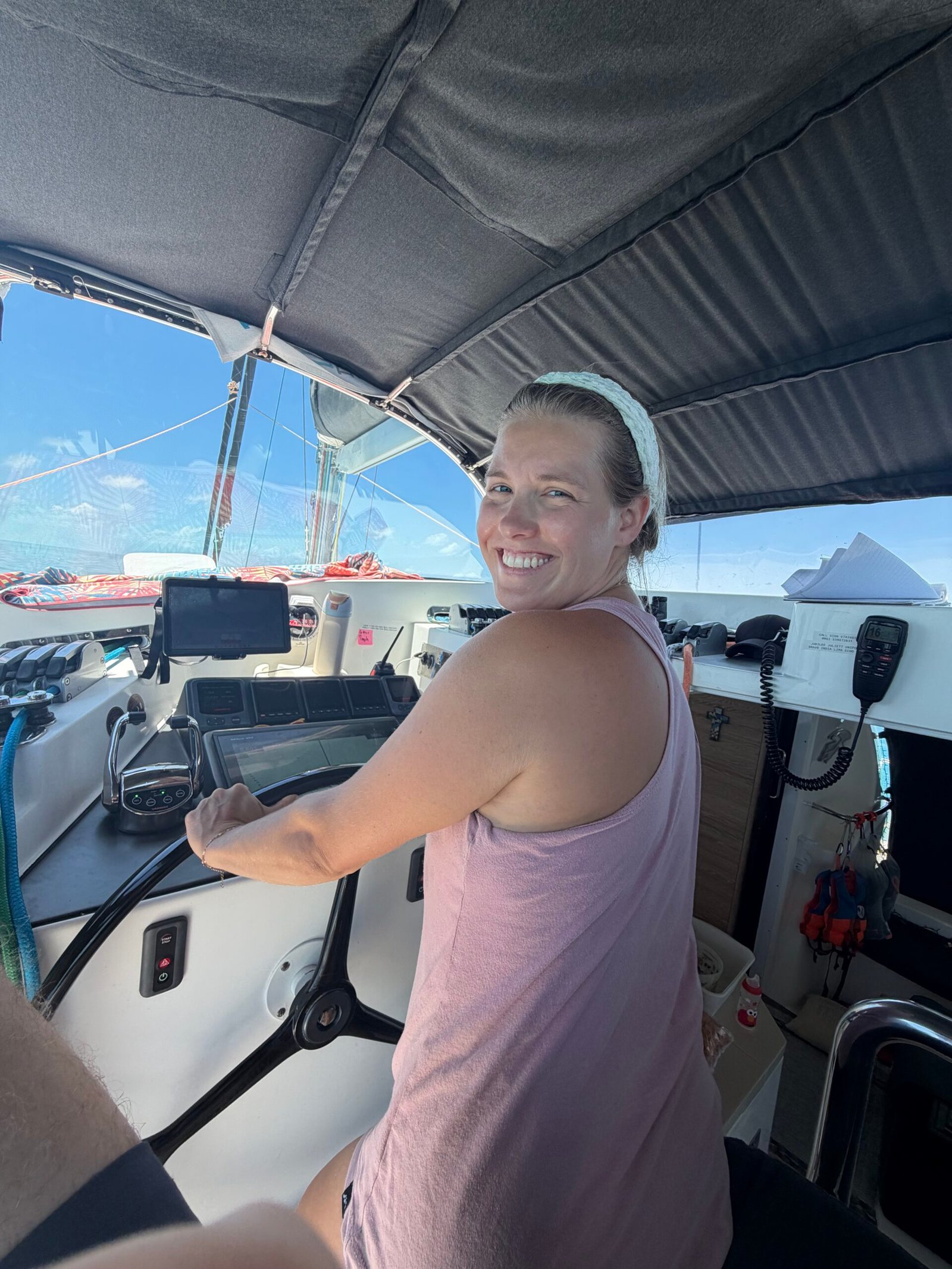
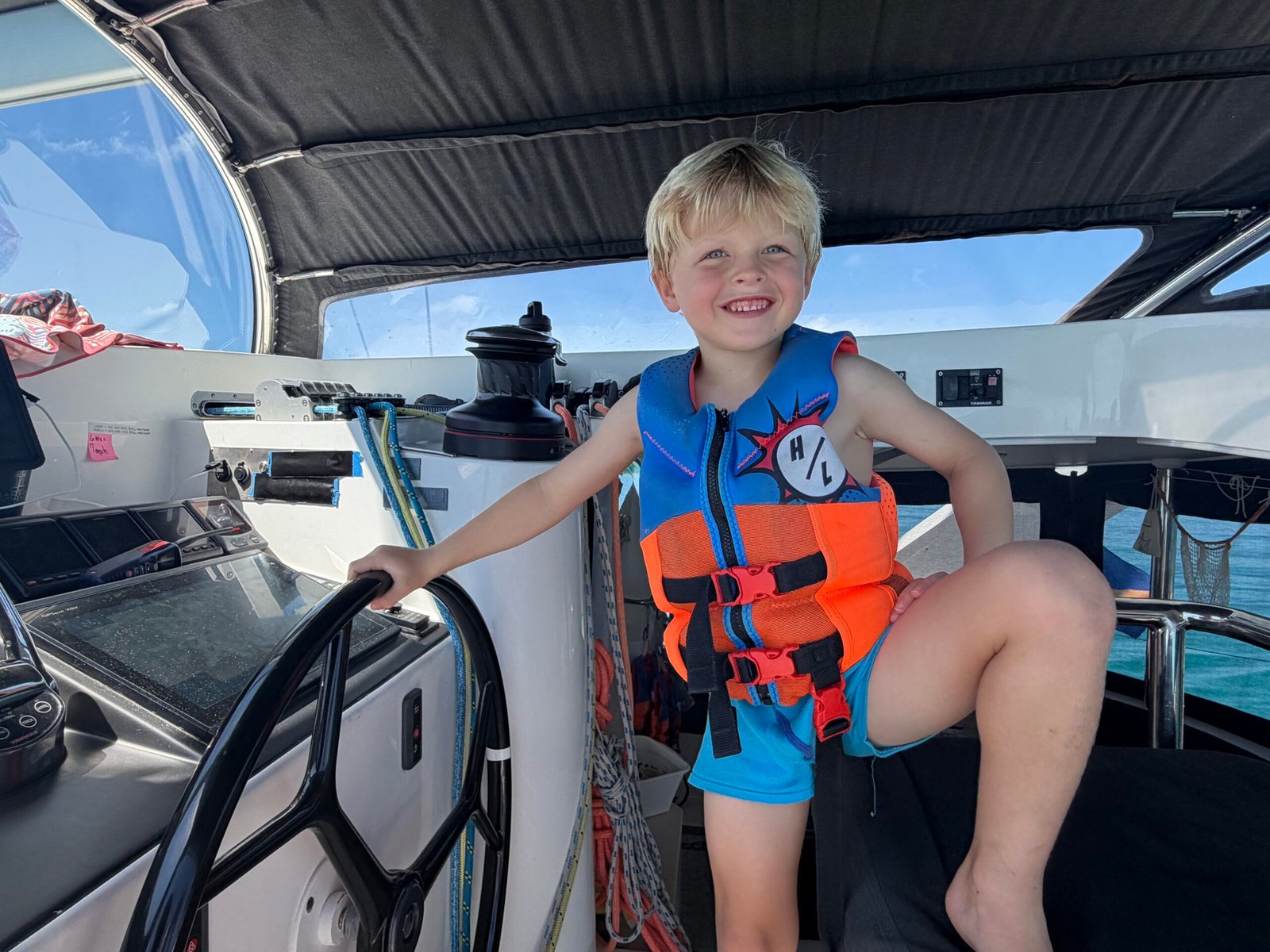
On May 7th, we pulled the anchor just after 10:00 AM and started making our way back to the United States. We could not have asked for better weather. At times, the ocean was as calm as a swimming pool, making the hand-steering process much easier—although still pretty tiring. Declan and Oliver also took a shift at the helm, which gave Pamela and me a nice break to rest.
As night began to fall, I took the helm for a few hours while Pamela put the children to bed. We took turns all night long: one of us at the helm, the other sleeping in the cockpit nearby, since the person steering couldn’t let go of the wheel to go below and ask for help.
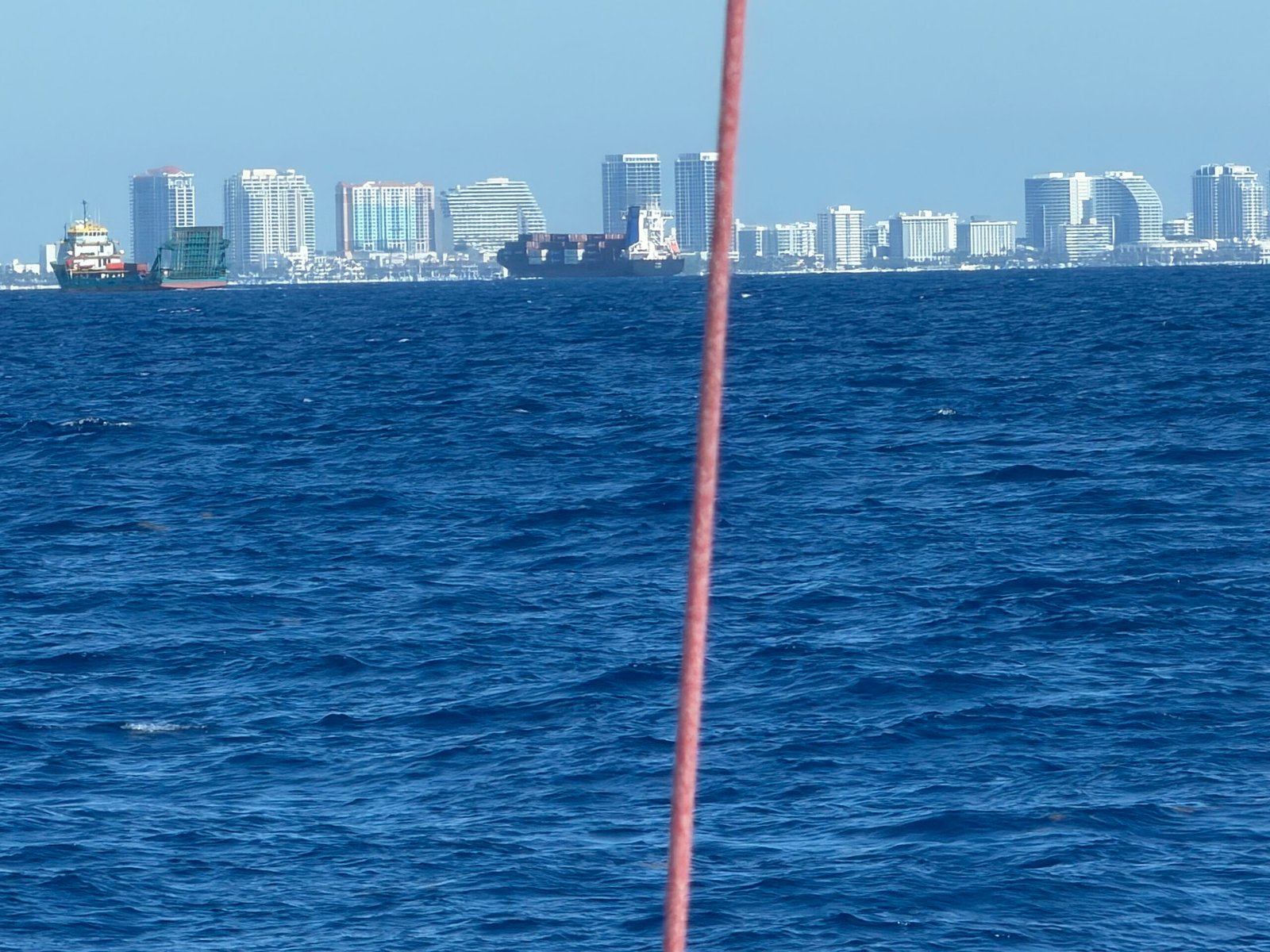
As we hopped into the Gulf Stream, things became considerably more difficult. Trying to discern all the lights in the middle of the night is a daunting experience. Not only were we seeing the lights of other ships, but we could also see the lights of low-flying planes as they approached the Fort Lauderdale airport. Pamela woke me around 4:00 AM with concerns about the lights she was seeing. It was puzzling to both of us. We saw multiple white lights and a faint red dot. We decided to steer to the right of them, and as we did, the dawn gave us the slightest glimpse of a massive freighter heading south. We were extremely thankful to have made the correct decision.
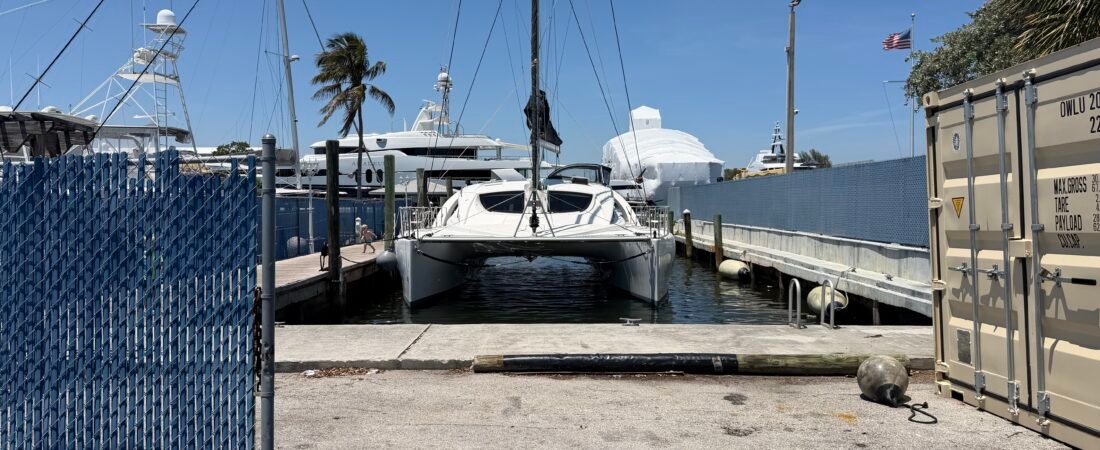
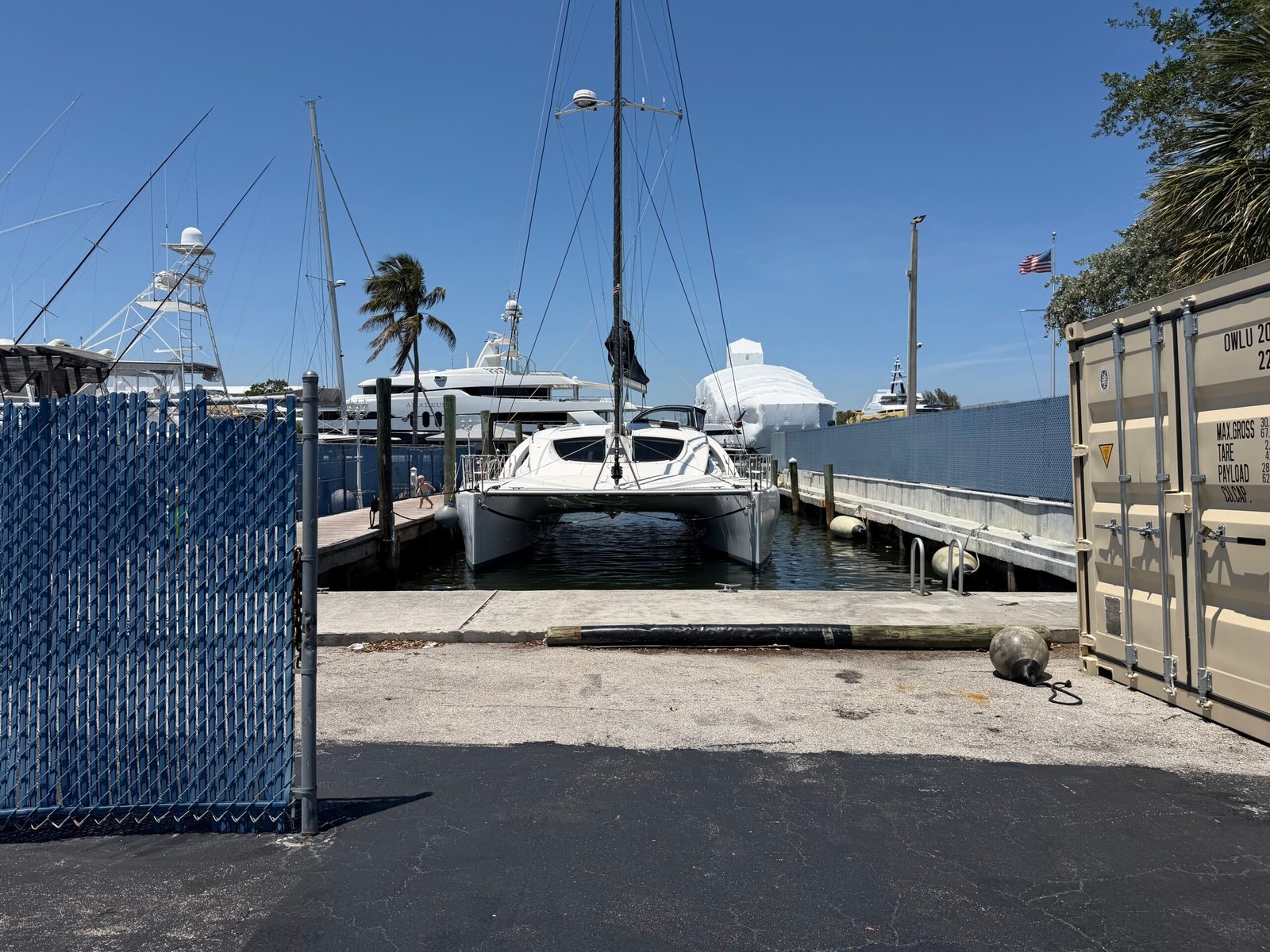
As we got closer to Port Everglades, the traffic and waves picked up. We were trying to head west, but large six-to-eight-foot waves were hitting us from the north. We had to constantly steer into the waves to avoid getting knocked around, and then correct back onto course. We felt extremely small with all the freighters around us trying to squeeze into the same port. Once inside, the waves calmed down quickly, but the marine traffic was still heavy. We slowly made our way south toward Just Catamarans, who would be helping us put our boat back together.
We turned down the final canal toward our dock. We had been sent a pin on Apple Maps, but it was still hard to find. Despite going slow, we overshot the slip we were supposed to turn into. In the narrow channel, I had to spin our boat around while trying not to bump into any of the superyachts docked along the canal.
Our first attempt to get into the slip did not go quite as planned. The incoming current pushed us toward the dock too quickly, forcing us to abort. The maneuver quickly put us backing up toward a massive 300-foot mega-yacht. Thankfully, I was able to check our sternway and get the boat heading back in the right direction. A neighboring boater jumped out and was right there to grab a dock line as we approached on our second try. This time, it was a soft landing. We pulled Jubilee further down the bulkhead until we hit our spot.
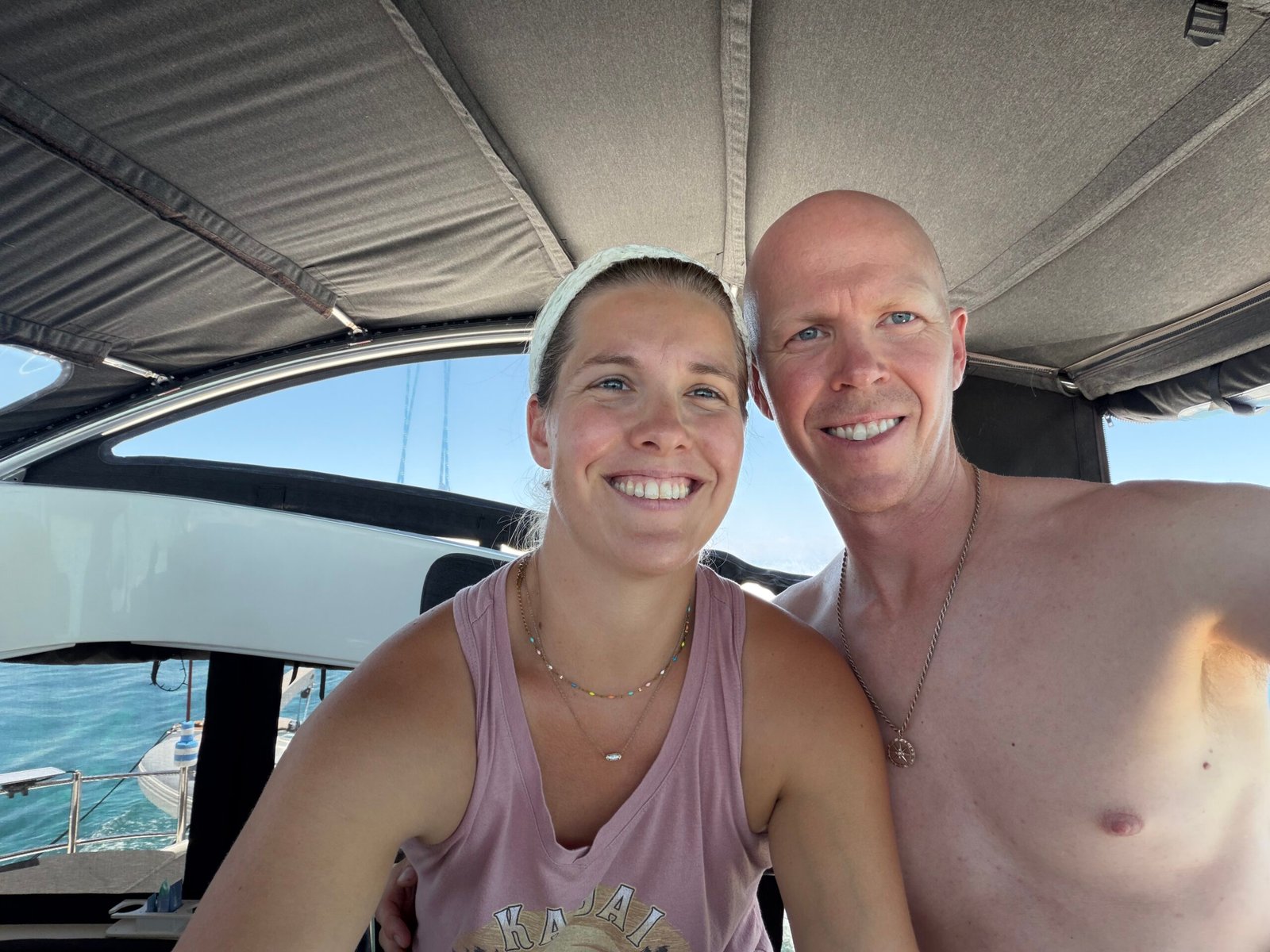
It was an incredible feeling of relief to have Jubilee securely tied to the dock. Pamela and I were utterly exhausted from the mental and physical strain of hand-steering our boat for 26 hours straight while keeping the boys fed and occupied.
The past few days have been a powerful reminder of how God is continually with us. Psalms 121:5–8:
“The Lord watches over you—the Lord is your shade at your right hand; the sun will not harm you by day, nor the moon by night. The Lord will keep you from all harm—he will watch over your life; the Lord will watch over your coming and going both now and forevermore.”
Your adventures are a testament of your faith and resilience. God is guiding your journey in many ways and providing…
So thankful all went well! What an experience, and so interesting to follow. Thanks for sharing Jason, sending prayers and…
We are enjoying keeping up with your updates! Memphis’ says Hi to Declan! Can’t wait to read about more adventures.…
Hi Jason and Pamela, I’m just catching up on your adventures. Yes, we had an unusual amount of cold weather…
Jason- Great to follow you and your wonderful family!! Be safe and enjoy


Leave a Reply